Pop-Up Retail and Restaurant Space in Washington DC
A pop-up can give a retailer or food operator a limited period to test a location, introduce a concept or reach new customers. The right space depends on what you plan to sell, how you will operate and how long you need the premises. A temporary storefront, a restaurant event and a market stall are different arrangements.
Before comparing locations, prepare your proposed dates, business use, layout, equipment needs and total project budget. Identify who will handle setup, utilities, cleaning, security and the return of the premises. Short occupancy periods make those details especially important.
Choose the right space arrangement
A pop-up storefront
A pop-up storefront gives the operator defined premises for an agreed term. Discuss the permitted use, access hours, signs, storage, deliveries and the condition in which the space must be returned. Confirm the terms for extending the arrangement if the test goes well.
An event inside a restaurant
An event inside an operating restaurant is usually arranged with the venue operator. Ask about capacity, food and beverage service, minimum spending, insurance and access for setup. The agreement should explain what the venue provides and what the event organizer must arrange.
A vendor stall
A vendor stall is a smaller operating area within a market or event. Confirm the footprint, power, water, waste handling, storage and selling hours with the organizer. Check which approvals the organizer holds and which responsibilities remain with the vendor.
A downtown property to discuss
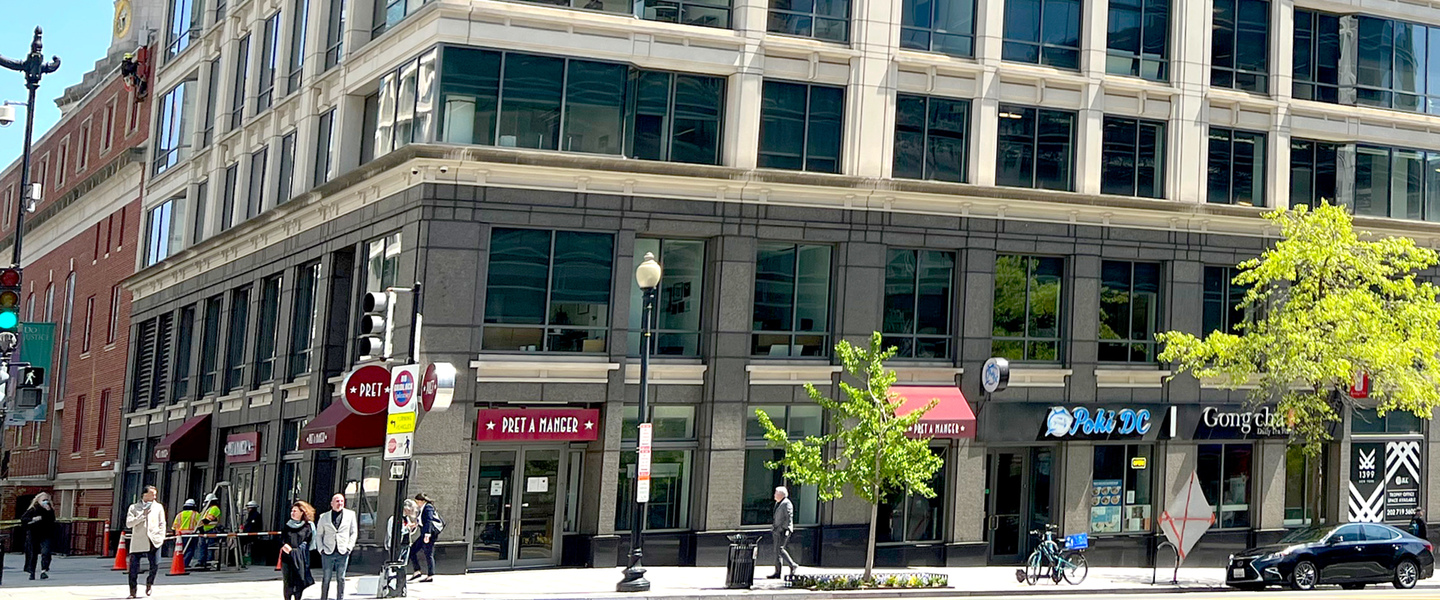
MILLER WALKER’s listing for 1399 New York Avenue NW advertises 2,173 SF and availability for pop-up retail uses. The property is also described as a former Pret-A-Manger café and restaurant space. Those descriptions provide a starting point for a conversation; they do not establish approval for a particular menu, event or short-term restaurant operation.
Review the 1399 New York Avenue plans and leasing details, then discuss your proposed use and dates with the leasing team. For a permanent food business, compare our DC restaurant spaces for lease.
Build the budget around the full run
Include rent or venue fees, deposits, setup, equipment, staffing, insurance, utilities, cleaning, marketing and the cost of closing out the space. For a food concept, also account for ingredients, packaging, waste and payment fees. Estimate sales conservatively and compare them with the costs of the complete run.
A short opening period does not automatically create a low-cost project. Setup expenses must be recovered over fewer trading days. Decide in advance how much capital you can commit and what result would justify extending the operation.
Pop-up restaurant and retail questions
Do pop-up restaurants make money?
They can, but profitability depends on sales, pricing and operating costs. Calculate the amount left from each sale after variable costs, then test whether the expected volume covers rent, staffing, setup and other fixed expenses. Separate financial profit from other goals, such as testing a menu or learning about a neighborhood. Those goals still need a defined budget.
Are pop-up restaurants legal in DC?
A pop-up food business must use an appropriate approval route for its premises and activities. DC’s Department of Buildings Pop-Up Permit program offers a streamlined temporary Certificate of Occupancy for qualifying uses of vacant space for up to one year. The agency reviews whether the proposed use qualifies; the program is not a blanket approval for every pop-up.
DOB’s Pop-Up Permit FAQs state that the permit does not authorize construction and does not include food, beverage or alcohol permits. Relevant DC Health and Alcoholic Beverage and Cannabis Administration approvals remain separate. Confirm the requirements for the actual address, menu, activities and dates with the responsible agencies before opening.
Can you rent out a restaurant for an event?
A restaurant may offer a private dining area, partial buyout or full-venue hire. Confirm directly with the operator that the proposed event is permitted and within the venue’s capacity. Review what is included, the required staffing, food and beverage terms, insurance, deposits and cancellation conditions. A venue reservation is different from taking over a restaurant lease.
How do you rent a pop-up stall?
Contact the market or event organizer with your product or menu, dates, footprint and equipment needs. Request the vendor terms and clarify what the fee covers. For food service, confirm water and handwashing arrangements, temperature control, waste disposal and the required approvals. DC Health publishes guidelines for temporary food service at special events.
Discuss your pop-up requirements
For a commercial space inquiry, send MILLER WALKER your proposed use, dates, size range, preferred neighborhoods, equipment needs and budget. Include whether you need cooking infrastructure, seating, storage or loading access. The leasing team can discuss relevant properties and the information needed to evaluate them.
Call 202-333-0303 or email the MILLER WALKER leasing team. You can also browse Washington DC properties to compare locations.
Agency resources checked November 9, 2026. Verify current requirements when planning a specific operation.